The care between
collection and cup
The origin story is only the beginning.
After collection, the coffee still has to become a prepared, traceable product. Explore the stages and use them to frame a conversation about the actual handling of a proposed lot.
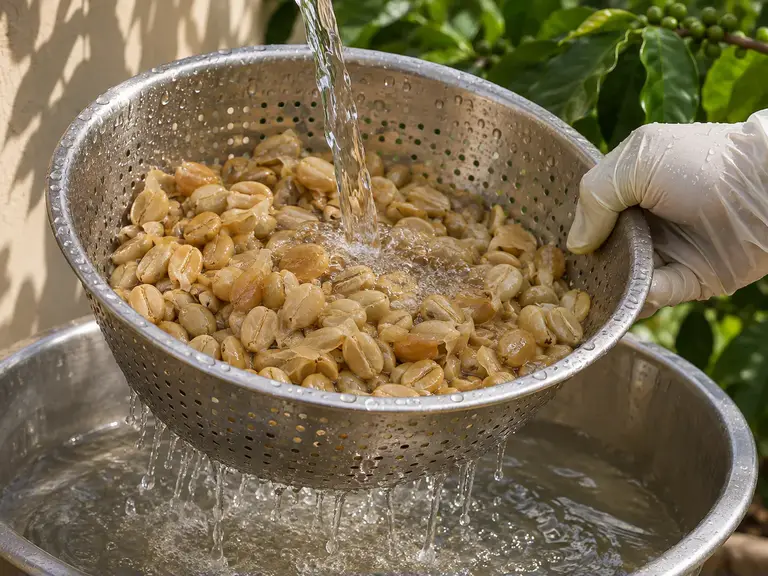
01 / Separating the coffee
Published descriptions of kopi luwak production include cleaning the recovered seeds, drying and roasting. The exact sequence can vary; a supplier should be able to explain its own process.
For a buyer’s brief, request the process flow, water and equipment controls, batch separation and the records used to release a lot. A clean-looking image is not a food-safety assessment.
Read the civet microbiome study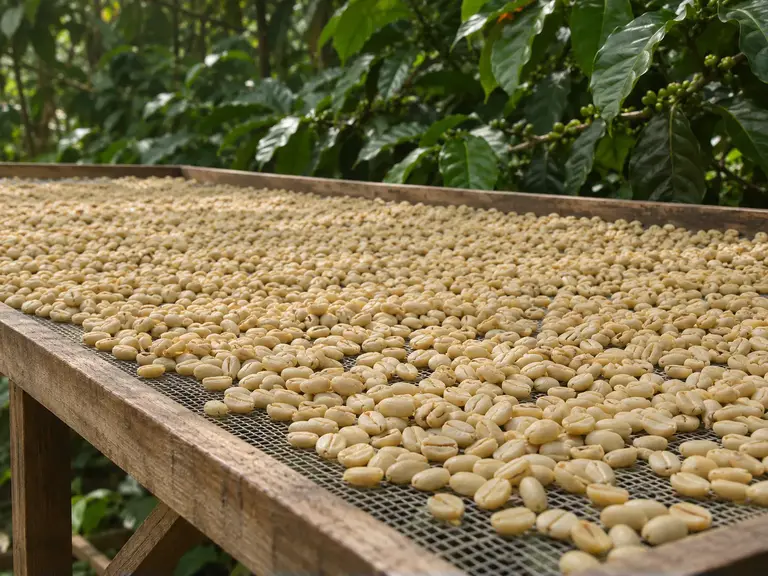
02 / Drying with
a record of the lot
Follow the coffee through each change in condition.
Drying is part of preparing coffee for later handling. General coffee guidance describes drying parchment coffee before storage and hulling; the controls and conditions must be assessed for the actual operation.
Ask how drying is monitored, how the coffee is protected during handling and which measurements are recorded. Avoid relying on a fixed number of sunny days as the whole specification.
Read FAO’s coffee handling overview03 / Preparing the green coffee
Hulling removes the dry covering around the seed. Sorting is a further opportunity to review the material that will be roasted or offered as green coffee.
Request the lot identification, preparation description, defect information and any relevant test results. Keep confirmed specifications separate from characteristics that have not yet been measured.
Read FAO’s coffee handling overview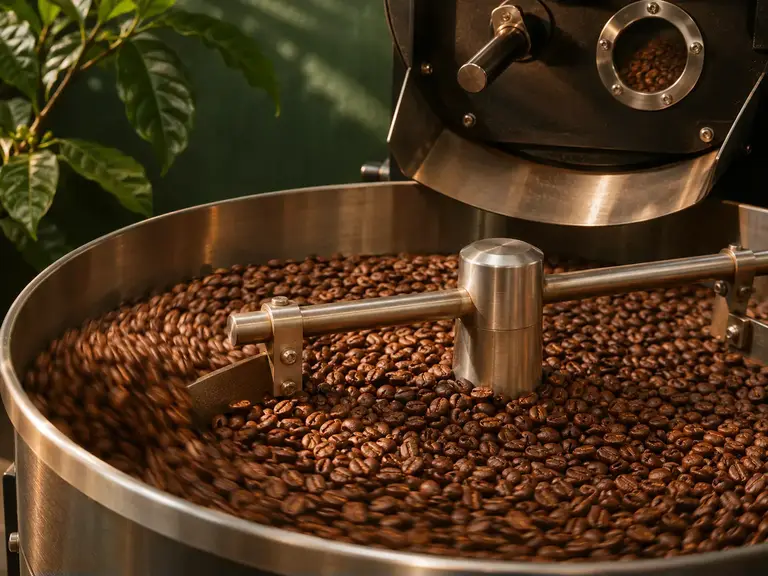
04 / A different kind
of transformation
Roasting develops aroma and flavour.
Heat turns green coffee into the brown roasted beans familiar to coffee drinkers. The roast is a separate choice from the collection method.
When comparing samples, ask for the roast date and profile, the lot represented, and a suggested preparation. Decide what suits your service through tasting rather than assuming that a darker roast or a more unusual process must be better.
Read the Coffee Association of Canada’s roasting guideFrom process story
to purchasing questions
Does roasting automatically prove that a lot is safe?
A roast photograph or a general temperature claim does not validate an entire production process. Ask for the processor’s controls and any relevant assessments for the specific product.
Is this a home-processing recipe?
This is an overview for understanding the supply chain. It does not prescribe washing treatments, drying times or roasting settings.
Does civet digestion guarantee a better cup?
No blanket quality guarantee follows from the processing story. Published research has raised questions about comparing digestion effects with species, origin and selection differences. Evaluate the actual sample.
Read further
Coffee handling and preparation
FAO’s Kenya-specific overview provides context for drying, storage and hulling. Its numerical settings are not a specification for this coffee.
Read FAO’s coffee handling overviewWhat can digestion tell us?
The quality commentary highlights limitations in comparing species, origin and processing effects.
Read the review of digestion and coffee qualityRoasting
The Coffee Association of Canada describes roasting’s role in developing coffee aroma and flavour.
Read the Coffee Association of Canada’s roasting guide