Following the trail,
without confining the civet
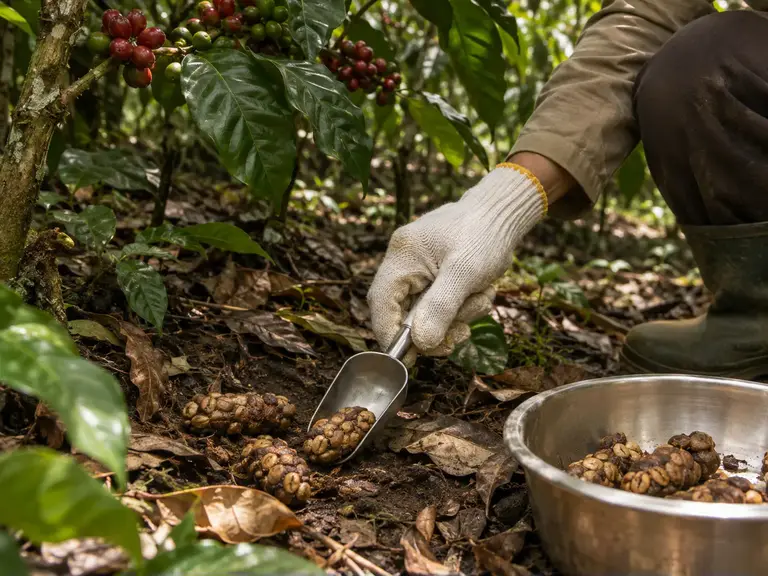
A collection story should lead to an evidence trail.
Wild collection describes gathering material deposited by free-ranging civets. The term on a label is a starting point for questions, rather than proof of how a particular coffee was produced.
A closer look at
the starting material
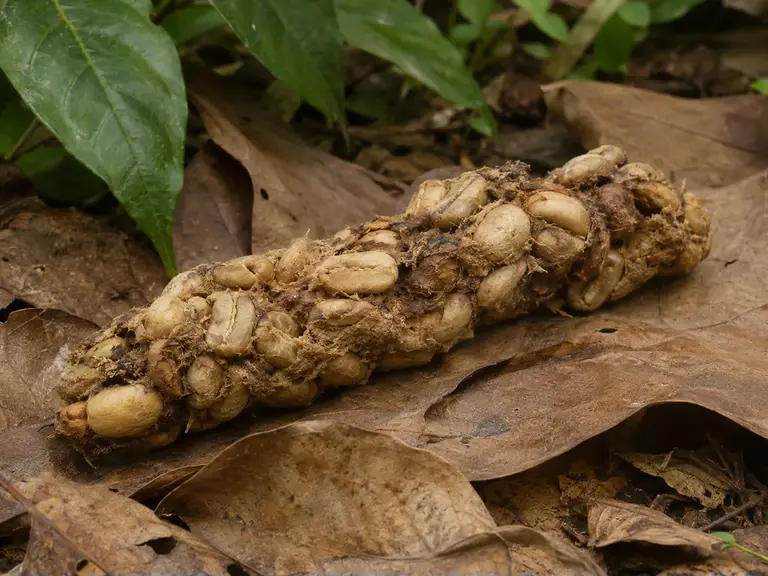
Coffee seeds are visible within the cluster.
Civet droppings can contain coffee seeds that remain together after digestion. Here, the pale seeds and the surrounding material are visible before cleaning.
Appearance alone cannot confirm where a sample came from, whether an animal was free-ranging, or whether a lot is suitable for food use. Those questions need records and appropriate assessment.
See the processing stagesAsk for a trail you can follow
Use the collection conversation to connect the place, the people and the lot. Request records that can be reconciled with what is eventually offered for sale.
Scroll the table to see all columns.
| Ask about | Request | Compare with |
|---|---|---|
| Collection area | A defined area and responsible contact | The origin description on the proposed lot |
| Dates and batch identity | Collection dates and a batch reference | Processing and delivery records |
| Who collected the material | The collector or collection group's role | The supplier’s chain-of-custody explanation |
| Separation of batches | How incoming material is kept distinct | Storage and processing records |
“Wild” needs more
than a photograph
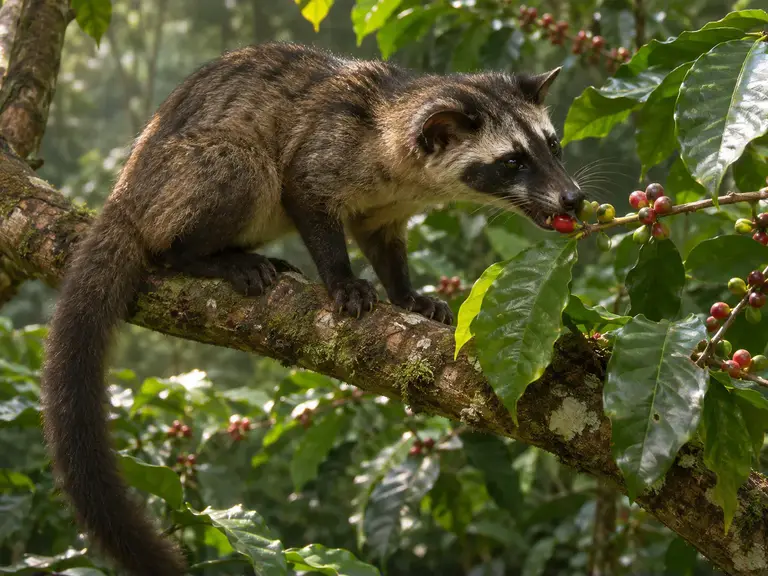
Ask how the claim is checked.
Animal-welfare organisations have documented concerns about captive civet coffee production. A forest scene or an animal photograph cannot resolve those concerns for an individual supplier.
Ask whether animals are captured, confined, transported or fed for production; who checks the answer; and what evidence is available. Do not treat “wild”, “natural” or “premium” as a substitute for that conversation.
Read World Animal Protection’s civet guidanceQuestions worth asking
Does a seed-filled dropping prove the coffee is wild-collected?
No. It shows a type of material, not a verified collection history. Request lot-specific traceability and evidence for the sourcing claim.
Can a photograph authenticate the finished coffee?
A photograph can explain a stage, but it cannot authenticate an entire supply chain. Compare collection records, processing records and the supplier’s evidence.
What should I ask before requesting a sample?
Describe the intended use and destination. Ask which lot the sample represents, which sourcing records are available, and which questions still require verification.
Next: from collection
to a prepared bean
Keep the lot identity with the coffee as it moves into processing.